

Most commercial technology problems do not begin with a dramatic failure. They begin with a practical request: get the new office online by Monday, add coverage to one more area, connect a temporary workstation, restore a failed camera, or create enough capacity to keep a project moving. The immediate need is real, and the fastest workable solution often makes sense at the time.
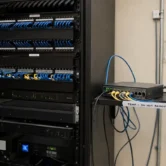
The problem comes later. Temporary infrastructure has a habit of becoming permanent. A cable run intended to last a few weeks remains for several years. A consumer-grade switch becomes part of the core network. An improvised power connection supports equipment that was never included in the original plan. As staff changes and documentation disappears, the organization gradually forgets which parts of the system were designed to last and which were simply installed to solve an urgent problem.
This does not usually happen because anyone is careless. It happens because the temporary solution works. Once the immediate pressure is gone, replacement becomes less urgent, and the system quietly becomes part of normal operations.
Temporary Does Not Mean Unimportant
A temporary installation can still become essential to daily operations. Once employees, equipment, security devices, or business processes begin depending on it, the distinction between “temporary” and “permanent” matters less than the consequences of failure.
This is why KCTS approaches short-term infrastructure with the same basic questions we would ask of a permanent installation:
1. What happens if this remains in place longer than expected?
A useful temporary solution should not create a future safety, reliability, or maintenance problem. Even when the work is limited in scope, the installation should be understandable, serviceable, and appropriate for the environment in which it is being used.
2. Who will understand it after the original installer leaves?
Many infrastructure problems are not caused by the equipment itself. They are caused by missing information. When cables are unlabeled, device locations are undocumented, or credentials and configurations are known only to one person, every future service call becomes slower and more expensive.
3. Can it be expanded without rebuilding everything around it?
Temporary systems often become the foundation for later additions. A small network extension becomes a department-wide requirement. A camera added for one concern becomes part of a larger security plan. A short-term equipment location becomes the permanent home for hardware. Thoughtful planning helps prevent each new request from becoming another layer of improvisation.
The most expensive temporary solution is not the one that costs the most to install. It is the one that becomes permanent without anyone realizing what it now supports.
The longer a temporary system remains in service, the more deeply it becomes connected to the operation around it. Employees develop routines around it. Additional devices are added. New vendors assume it was intentionally designed that way. Eventually, replacing the original workaround requires more coordination than anyone expected because the workaround is no longer isolated—it has become infrastructure.
That is why the real decision is rarely between a temporary solution and a permanent one. The real decision is whether the temporary solution will leave the organization with a clear path forward or create another hidden dependency.

Temporary infrastructure is most manageable when its purpose and limitations are visible. Labels, photographs, device inventories, cable routes, port assignments, and simple system notes can make the difference between a future technician understanding the environment in minutes or spending hours reconstructing it.
Documentation also creates accountability. It gives property managers, business owners, technicians, and vendors a shared understanding of what was installed, why it was installed, and what should happen next. That clarity is especially valuable when a temporary solution remains in place longer than originally planned.
The best time to decide how a temporary system should become permanent is before everyone becomes dependent on it. Sometimes the correct next step is replacement. Sometimes it is expansion, reconfiguration, or formal documentation. In other cases, the temporary installation is already suitable for continued use once it is properly inspected and integrated into the larger environment.
What matters is that permanence becomes a conscious decision rather than an accident.
Designing Short-Term Solutions for Long-Term Reality
A well-managed temporary installation does not need to be overbuilt. It needs to be honest about risk, documented clearly, and installed in a way that does not create unnecessary problems for the next person who works on it.
At KCTS, that means thinking beyond the immediate request. We consider how the system will be used, what it may eventually support, what limitations should be documented, and what would be required to convert it into a proper long-term solution.
The goal is not to turn every small request into a large project. The goal is to prevent a small request from quietly becoming a large liability.
Commercial infrastructure should help the organization operate with confidence. That requires more than equipment that happens to work today. It requires systems that can be understood, maintained, expanded, and supported tomorrow.
KCTS helps clients evaluate what they already have, identify where temporary solutions have become operational dependencies, and create a practical path toward a more stable environment. We work across electrical, data, telecom, infrastructure, and managed technology because these systems rarely operate independently in the real world.
A temporary solution may be necessary. Temporary thinking does not have to be.